
People • Process • Performance
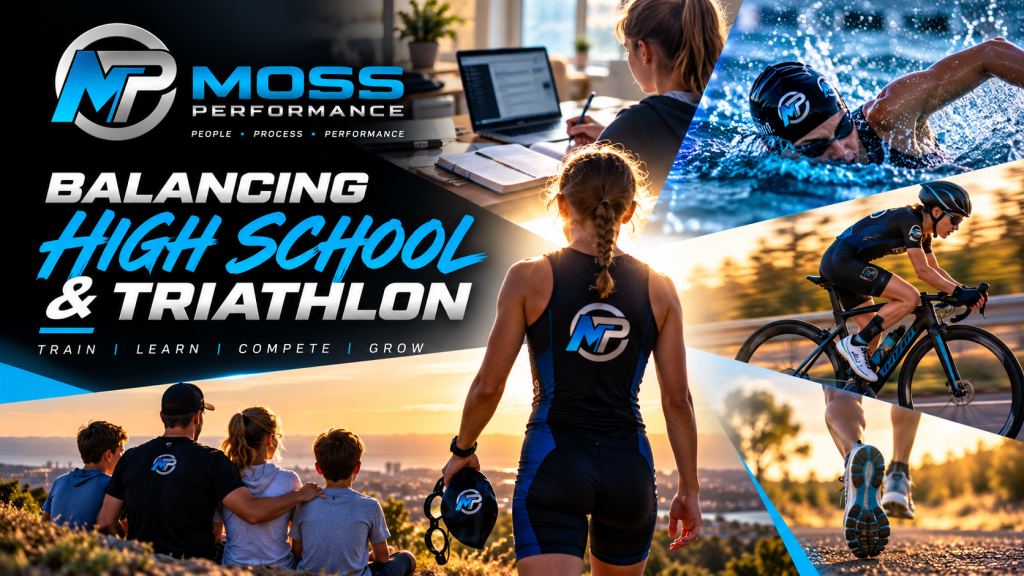
For young triathletes, balancing high school, training, competition and a social life can be challenging. Between early morning swim sessions, school assignments, afternoon training and weekend racing, it’s easy to feel like there aren’t enough hours in the day. But success in triathlon shouldn’t come at the expense of education, health or enjoying your teenage years. At Moss Performance, we believe developing successful young athletes is about more than training harder. It’s about creating the right balance, building positive habits and supporting long-term development.
1. Plan Your Week, Not Just Your Training
One of the most important skills a young athlete can develop is time management. School commitments, exams, assignments and training sessions should all be considered when planning the week. A structured routine helps athletes stay organised, reduce stress and make the most of their available time.
The key: Training should complement school commitments, not compete with them.
2. Quality Over Quantity
More training doesn’t always mean better performance. For developing athletes, the focus should be on purposeful sessions that improve technique, fitness and race skills without creating unnecessary fatigue. A well-designed program considers the athlete’s age, development, school workload and individual goals. Sometimes, reducing training during exam periods is the smartest performance decision.
3. Recovery Is Part of the Process
Balancing school and triathlon places significant physical and mental demands on young athletes. Sleep, nutrition, hydration and downtime are essential for both academic performance and sporting development. Teenagers generally need 8–10 hours of sleep each night, which can be challenging with early training starts. Recovery isn’t a reward for hard work. It’s an essential part of improvement.
4. Communication Is Everything
Young athletes need to feel comfortable communicating with their coach, parents and teachers. Upcoming exams, school camps, assessment deadlines and periods of increased stress can all affect training. At Moss Performance, we encourage athletes to communicate early so their training can be adjusted without feeling they’ve fallen behind. Flexibility is not a weakness. It’s part of a successful development pathway.
5. Remember to Enjoy Being a Teenager
Triathlon can teach discipline, resilience, confidence and commitment, but it should also be enjoyable. Spending time with friends, participating in school activities and having interests outside sport are important for maintaining motivation and preventing burnout. The goal isn’t to produce the best 15-year-old athlete. It’s to develop a healthy, motivated and capable athlete who can continue improving for years to come.
The Moss Performance Approach
Our philosophy is built around three principles:
- People — Supporting the individual, not just the athlete.
- Process — Building sustainable routines, skills and habits.
- Performance — Achieving results through consistent, long-term development.
Balancing high school and triathlon isn’t about doing everything perfectly. It’s about making good decisions, managing priorities and understanding that progress takes time. The best young athletes aren’t necessarily those who train the most. They’re those who learn how to train consistently, recover effectively and maintain balance in their lives.
Develop Your Potential with Moss Performance.
Moss Performance provides individualised triathlon coaching and development pathway programs for young athletes looking to improve their performance while balancing school and life.
Stephen Moss | Head Coach – Moss Performance
www.mossperformance.com.au
stephen@mossperformance.com.au
Instagram: @mossperformancecoaching