
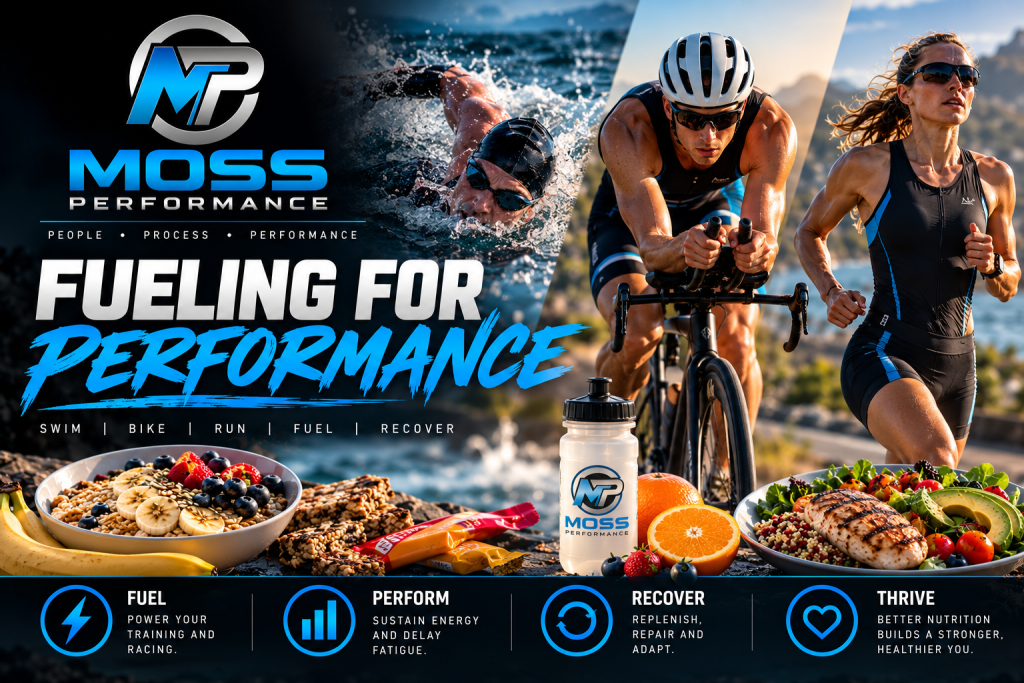
Fuel to Perform: Why Nutrition Matters in Triathlon
Train with purpose. Fuel with intent. Perform at your best. Triathlon is a demanding sport. Balancing swimming, cycling and running requires consistency, discipline and a well-structured training program. But there’s another critical element that is often overlooked: nutrition.
At Moss Performance, we believe performance is built through the combination of People, Process and Performance. Nutrition is an essential part of that process. Whether you’re a developing junior, an age-group athlete or competing at an elite level, how you fuel your body directly influences your ability to train, recover and race.
1. Fuel the Work, Not Just the Race
One of the biggest mistakes triathletes make is focusing on race-day nutrition while overlooking their everyday training requirements. Your body needs sufficient energy to support training, recovery, growth and general health.
- Reduced training quality and endurance
- Slower recovery and persistent fatigue
- Increased illness and injury risk
- Reduced concentration and motivation
- Disrupted hormonal health and, in younger athletes, impaired growth and development.
The key message: You cannot consistently perform at your best if you’re not providing your body with enough energy.
2. Carbohydrates: Your Performance Fuel
Carbohydrates are a primary fuel source for moderate- to high-intensity exercise. For triathletes, carbohydrate availability becomes particularly important during demanding swim sets, interval sessions, long rides and race-specific training.
- Before training: Toast, banana, oats or another easily digested carbohydrate source.
- During longer sessions: Sports drinks, gels, bananas or energy bars.
- After training: Carbohydrates combined with protein to support recovery.
For endurance exercise lasting approximately 1–2.5 hours, athletes may benefit from around. 30–60 g of carbohydrate per hour. Longer events may require up to 90g per hour when the athlete has practised and can tolerate that intake. These are general guidelines, not fixed targets. The appropriate amount depends on session intensity, duration, age and individual needs.
3. Recovery Starts with Nutrition
Training creates the stimulus for improvement. Recovery allows the body to adapt. Following demanding sessions, prioritise three things:
- Carbohydrates: Replenish the energy stores used during training.
- Protein: Support muscle repair, adaptation and development.
- Fluids and electrolytes: Replace fluid and sodium losses according to conditions and individual sweat rates.
A simple recovery meal or snack can make a significant difference, particularly when another training session is scheduled later that day.
4. Hydration: Small Mistakes, Big Consequences
Dehydration can negatively affect endurance, concentration and physical performance, particularly when training or racing in hot conditions. Athletes should develop a consistent hydration strategy rather than waiting until race day. Consider the weather, session duration, sweat losses and access to fluids. Avoid both significant dehydration and excessive drinking. Good hydration is planned, practised and individualised.
5. Junior Athletes: Fuel Growth and Performance
For developing athletes, nutrition is about much more than sporting results. Young triathletes are balancing school, training, competition, social commitments and physical development. Adequate energy intake supports growth, learning, concentration and long-term athletic development. Junior athletes should focus on regular meals, appropriate snacks and eating enough to meet their daily needs rather than restrictive diets or unnecessary supplements.
Parents and coaches play an important role in developing positive, sustainable nutrition habits.
6. Practise Your Race-Day Nutrition
Just like swimming technique, cycling skills and running pace, nutrition strategies need to be rehearsed. Use key training sessions to establish what foods and fluids work, how much carbohydrate you can comfortably consume and when you need to fuel. Never leave your nutrition strategy to chance on race day.
The Moss Performance Approach
At Moss Perfrmance, we encourage athletes to think beyond individual training sessions and focus on the complete performance process. Train consistently. Fuel appropriately. Recover effectively. Successful performance isn’t simply about training harder. It’s about creating the conditions that allow your body to adapt, improve and perform when it matters. Nutrition is not an optional extra. It’s part of the training program.
Ready to Take Your Performance Further?
Moss Performance provides structured triathlon coaching for developing juniors, age-group athletes and high-performance competitors. Discover how a personalised training approach can help you achieve your goals.
MOSS PERFORMANCE | People • Process • Performance
www.mossperformance.com.au | Instagram: @mossperformancecoaching
For individual nutrition advice, particularly for growing athletes or those with complex fuelling requirements, consult an Accredited Sports Dietitian.